I recently caught up with Mark, the founder and luthier behind Kepler Guitars, to chat about building purpose-driven instruments for metal players, competing directly with US and Japanese boutique custom shops without the brutal import markup. Before we get there, don’t forget, I am trying to keep up with small builders, with a focus on Australian and NZ, so if you have any recommendations, feel free to reach out or check out our other Australian and NZ builder articles in the series.
Built for Metal Precision
Most guitarists spend years adjusting their technique to fit off-the-rack instruments, compromising on tone, neck feel, or weight simply because that’s what’s available off the rack, Mark says. Kepler flips that logic on its head by designing guitars explicitly around how modern metal guitarists actually play.
We make guitars for musicians who understand that playing metal music requires precision. Our guitars are purpose-built with metal guitarists at the forefront. We’ve spent hundreds of hours designing the neck profiles, scale length, pickups, bridges, woods, and body shapes to deliver tones based on how you actually play.
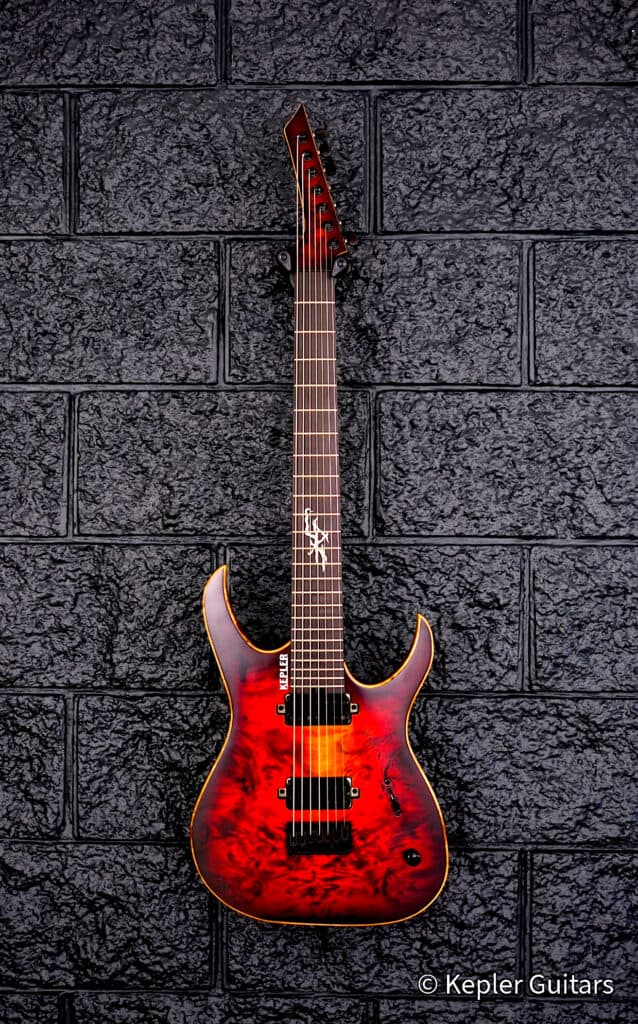
- The Zen & Apex: Kepler’s two pre-specced production models, engineered ground-up for heavy riffing and tight low-end response.
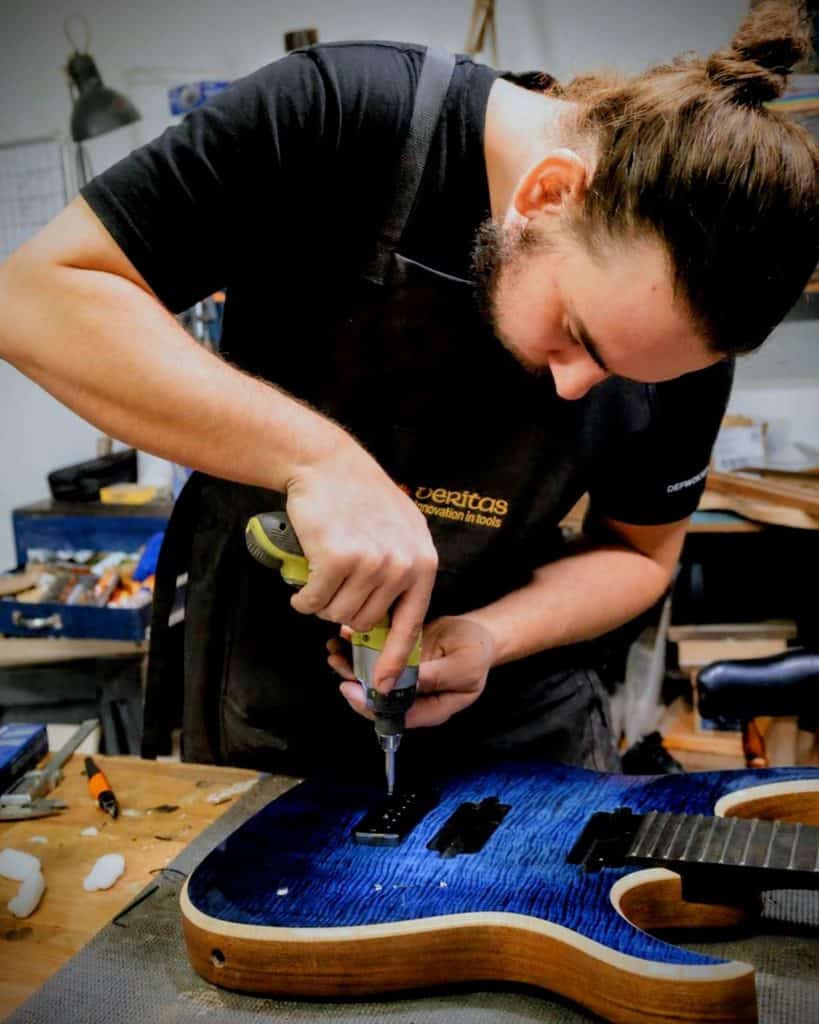
- The Semi-Custom Process: For players with specific demands, Kepler offers a semi custom builds which start with a conversation ranging across tone, playing style and feel to get the guitar that works for you.
Felling Timber & Featherweight Guitars for Ripping Tone
Kepler leans heavily into Australian roots and native timbers, utilizing Queensland Maple, Tasmanian Blackwood, New Guinea Rosewood, and Paper Rock (an Aussie-made sustainable alternative to Richlite).
However, the standout feature of their flagship Zen model is its use of plantation-grown Australian Paulownia. Mark goes to the lengths of personally sourcing and felling Paulownia timber when the opportunity arises.
Why Paulownia for Heavy Metal?
- Swamp Ash Sonics: Mark says that after years of research and trials, he feels that Paulownia delivers a bright, punchy, and resonant acoustic profile remarkably similar to Swamp Ash. In heavy metal, where high-gain distortion can easily turn into muddy noise, Paulownia’s decreased density provides the note clarity and bite needed to cut through a dense band mix.
- Insanely Lightweight: Traditional solid-body electric guitars often weigh between 3.5 kg to over 4.5 kg. Using Australian Paulownia drops a Kepler body down to roughly 1.8 kg—about a full kilogram lighter than traditional body woods. For touring musicians or studio players pulling long sets multiple nights a week, that weight reduction dramatically reduces shoulder and back fatigue.
- 100% Sustainable: Paulownia is one of the fastest-growing hardwood species in the world, reaching harvestable size in just 5–8 years (compared to 20–40+ years for traditional tonewoods). It also regrows from its existing root system, Mark says, creating a self-sustaining timber supply that doesn’t contribute to deforestation or the harvesting of endangered slow-growth forests.
“There’s a directness to how we work with customers that feels truly Australian. No sales speak, no unnecessary upselling. We just thrive off honest chats about what your guitar needs to do and how we can help you achieve that.”
Personally, I’m not a metal player (just a metal lover), I don’t have the chops for it, but comparing under 2kgs for a guitar versus my Tele which weighs around 3.5kgs is insane. I’m just going to say that the reason that metal players can spin kick while playing is due to the weight of their guitars, not my advancing age and limited flexibility. Regardless, I love the commitmment to sustainability and player comfort that the team at Kepler have focussed on.
Wins, Hurdles, and Advice for Makers
“Just start. Get an MVP into people’s hands, that’s where real feedback comes from. Strive for precision in the details, but don’t let perfectionism paralyze the whole thing. The growth you’ll see in yourself beats any feeling of ‘done.'”
- The Big Win: Seeing real players buying, gigging, and genuinely loving their Kepler builds.
- The Ongoing Challenge: Scaling the business up to meet demand without sacrificing authenticity or their hand-built, bench-made roots. Mark says that with every stage of their growth there has been the pressure to outsource or speed the process up, which is something that they seem determined not to do and as mentioned, leaning into authenticity at all times.
Mark’s musical journey didn’t start in extreme metal—it started with classic rock guitar worship.
- Hooked On: Jet and AC/DC. Mark vividly recalls buying Jet’s debut album at Kmart and instantly falling in love with raw guitar tones.
- The Shift to Metal: Coming from an audio engineering background, Mark realized that metal is exceptionally demanding technically. It wasn’t the vocals that pulled him in, but a deep respect for the precision, sharp riffing, and unforgiving technique required to play it well.
- Current Rotations:Lamb of God, Jinjer, and Marten Håkansson of Meshuggah (for his deliberate, calculated note choices).
- Dream Live Show: TesseraCT—for their unmatched tonal exploration, complex rhythm structures, and technical execution.
Ride-or-Die Rig: MI Audio Megalith Beta (#002)
When asked about the one piece of gear he’ll never part with, Mark points out his MI Audio Megalith Beta amplifier pedal—specifically serial number #002.
“MI Audio was a boutique Sydney amp builder run by Michael Ibrahim. When I was 16, I went into Allan’s Music on the hunt for my first real amp. An employee, who looked remarkably like Wolverine, brought out this new local Sydney amp from the back. It blew every Peavey, Mesa Boogie, and ENGL in the room out of the water.
My old bandmate and I tracked down Michael’s workshop on Parramatta Road, hung out, talked gear, and bought the first two Megalith Betas off the line with serial numbers #001 and #002. That workshop inspired me to build cool, unique gear in the music industry.”
Where to Try & Order a Kepler Guitar
- Website: Kepler Guitars (Explore the Zen & Apex models or submit a semi-custom build sheet for a response within 48 hours).
- In Person: Hands-on display models are available to test at Unreil Studios in Sydney, as well as upcoming guitar trade shows across Sydney and Melbourne.
- Instagram:Kepler.Guitars